
Please click the frequently asked questions below for further information and IPC precautions required:
What is Campylobacter?
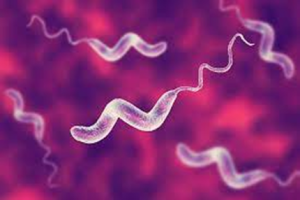
Campylobacter are a genus of bacteria that commonly cause food poisoning associated with raw or undercooked meat in particular poultry; the two most common species implicated in human disease are C. jejuni and C. coli.
Complications can include Guillain-Barré syndrome which is a very rare and serious condition affecting the nerves causing problems such as numbness, weakness and pain in the feet, hands and limbs. Most people will make a full recovery eventually, although occasionally it can be life-threatening and leave some people with long-term problems.
Why is this information important?
If NIAS staff are aware that the patient is potentially symptomatic or a confirmed case of Campylobacter then this should be communicated to EAC and ED staff when transferring the patient to ensure effective patient care and management.
How is it spread?
Two species of campylobacter, C. jejuni and C. coli, cause most infections. The bacteria live in the gastrointestinal tract of mammals including livestock and pets such as dogs and cats.
People often get C. jejuni and C. coli from:
- raw or undercooked meat, especially poultry
- unpasteurised milk
- untreated water
For most infections, it’s difficult to trace it back to the exact source. Other causes include contact with pets that have diarrhoea or contact with livestock. Bacteria can also spread through poor hygiene in food preparation, for example, if you don’t wash your hands, you can spread bacteria from chicken to salads.
The incubation period is usually 2 to 5 days. But it can be as short as 1 day and up to 11 days.
Patients should continue to be considered infectious while symptomatic.
What are the symptoms of Campylobacter?
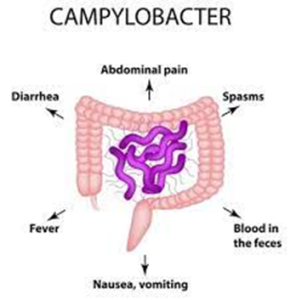
Symptoms usually include:
- Diarrhoea (often bloody)
- Fever
- Stomach cramps
- Nausea and vomiting may accompany the diarrhoea
These symptoms usually start 2 to 5 days after the person ingests Campylobacter and last about one week.
Sometimes Campylobacter infections cause complications, such as irritable bowel syndrome, temporary paralysis, and arthritis.
In people with weakened immune systems, such as those with a blood disorder, with AIDS, or receiving chemotherapy, Campylobacter occasionally spreads to the bloodstream and causes a life-threatening infection.
In people with weakened immune systems, such as those with a blood disorder, with AIDS, or receiving chemotherapy, Campylobacter occasionally spreads to the bloodstream and causes a life-threatening infection.
IPC Precautions
- Contact Precautions should be used.
- Hand Hygiene should be completed as per the 5 moments with Soap and Water.
- Eye protection should be risk assessed and worn if any risk of splashes.
- Gloves and Aprons should be worn.
- The patient should be transported via ambulance with no other patients present.
- All waste should be treated as Clinical Waste and be disposed after patient handover.
- Laundry should be treated as contaminated, placed into an alginate bag and placed into a red laundry bag.
What Cleaning is required?
All equipment and the ambulance should have an in-between patient clean with combined detergent and disinfectant wipes, paying particular attention to touch points.
Do staff need any prophylaxis or follow up?
If staff have been exposed to a confirmed or suspected case of Campylobacter, they should remain vigilant for any symptoms but there is no active follow up required.
If staff become symptomatic, they should remain off work until 48 hours asymptomatic (72 hours if food handling).